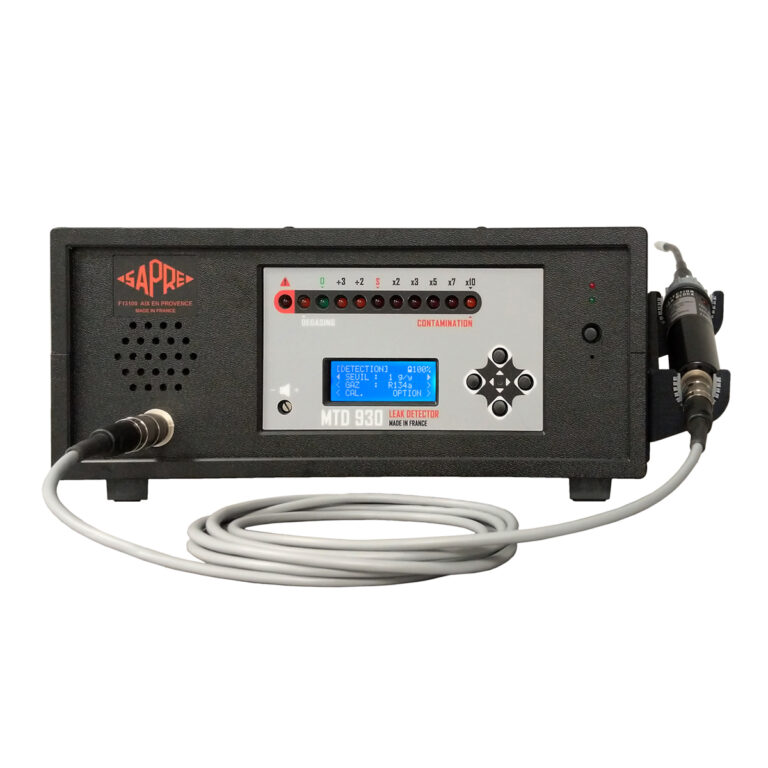
MTD 920
GAS LEAK DETECTOR FOR EXPERT ANALYSIS AND PRODUCTION
REFRIGERANT GASES HFC, HFO, HC and H2/N2 TRACER GAS & NIDRON
The latest generation of the MTD range, the MTD 920 is a high-sensitivity multi-gas leak detector for expert analysis and production-line testing of systems charged with HFC, HFO and HC refrigerants or H2/N2 tracer gas (Nidron). With automatic calibration against a calibrated leak and two detection modes, SAMPLE and TRACKING, it shows an estimated leak rate on its graphic display. User-configurable sensitivity profiles allow the gas and the detection threshold to be adapted quickly to the systems in production. Its minimum sensitivity is 0.3 g/yr for HFCs and HFOs, and 0.1 g/yr for R290 and R600a. It is mains-powered, with an optional internal battery.In the same range:
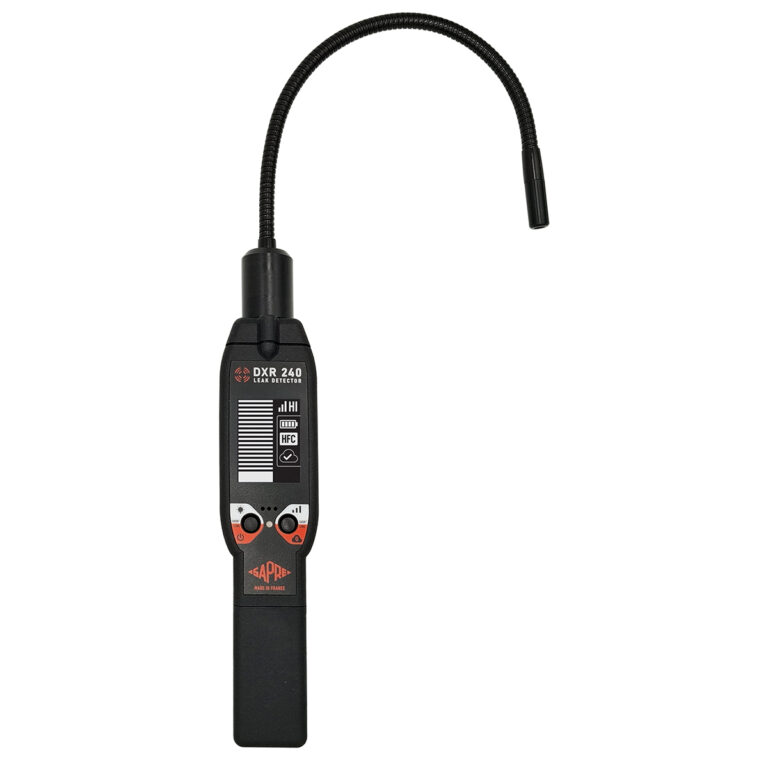
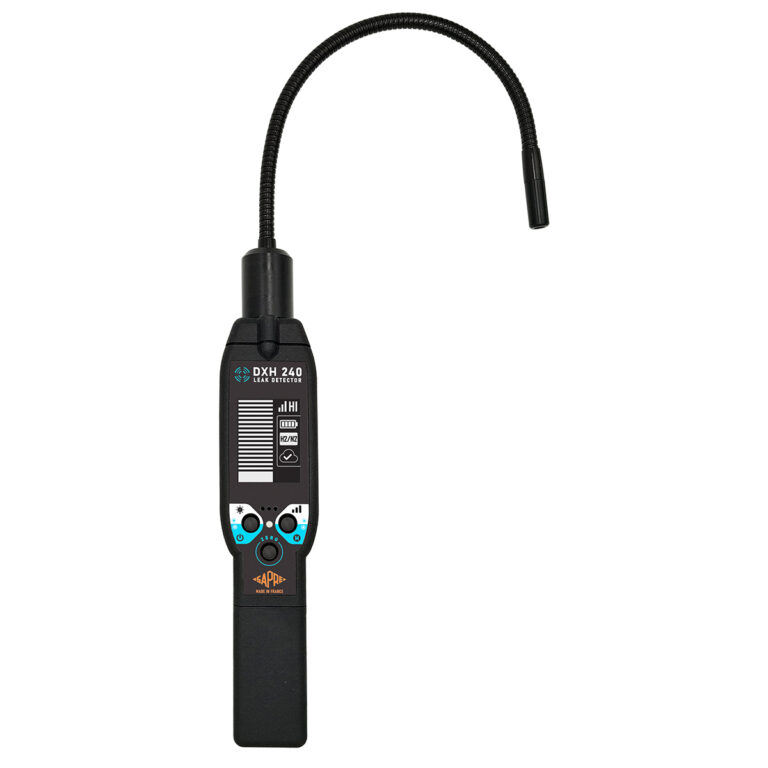
For portable use, in maintenance and in the workshop, the DXR 240 detects the same HFC, HFO, HC and H2/N2 gases, with a graphic display and 3 sensitivity positions. For specific H2/N2 forming gas or Nidron detection, the DXH 240 offers 4 sensitivity positions and 2 detection modes.
Accessories:
Automatic calibration of the MTD 920 is carried out with the FCE 24-PVA-DR adjustable calibrated leak with dual reservoir (R134a, R1234ze, R1234yf, R32, R290, R600a). It can also be carried out on other gases, including H2/N2, with the FCH 99M-PVA-R150 adjustable calibrated leak with built-in reservoir.
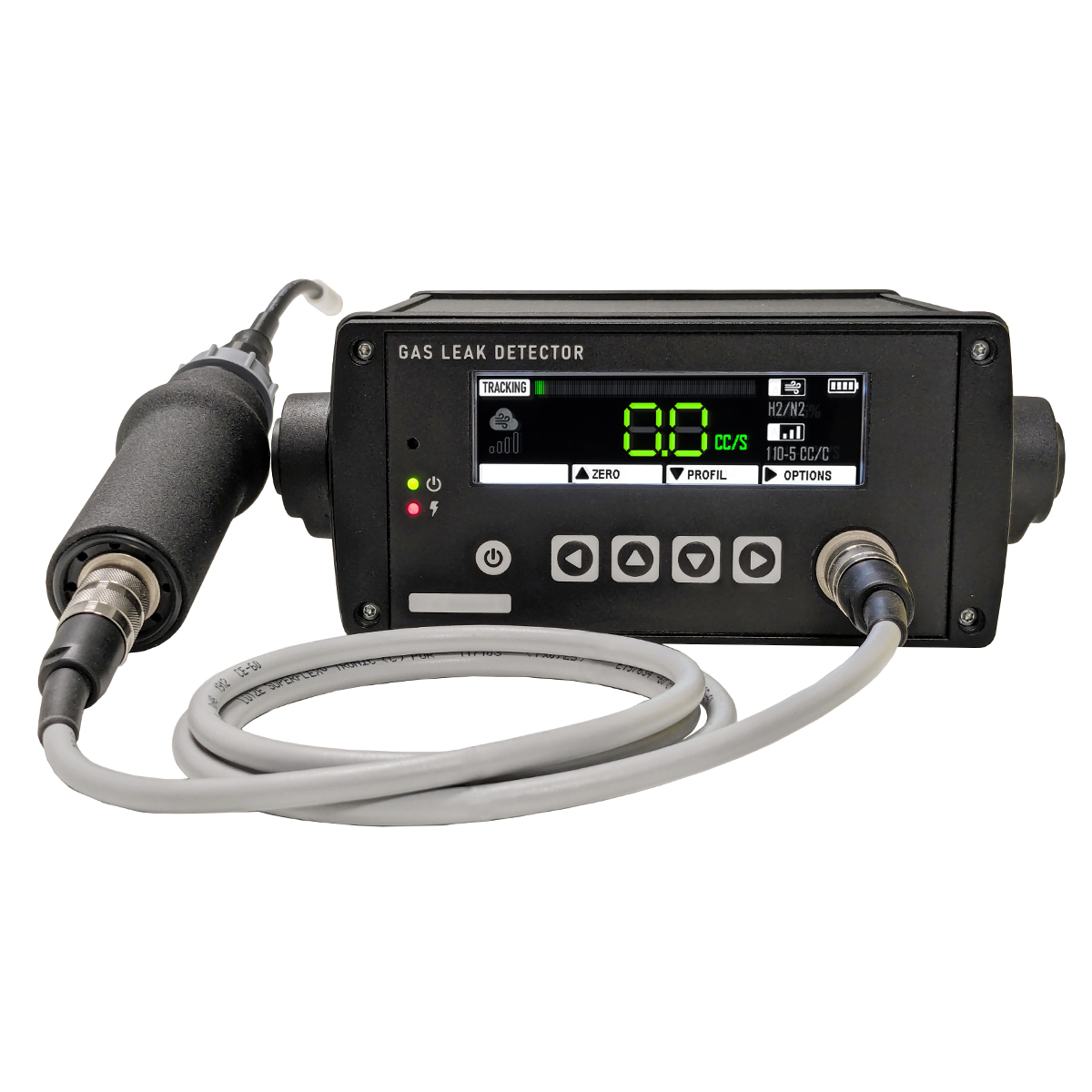

- Industrial detector for expert analysis and production, for refrigerant gases and H2/N2 tracer gas.
- Graphic screen showing the estimated leak rate.
- Automatic calibration against a calibrated leak.
2 detection modes:
- SAMPLE mode.
- TRACKING mode.
2 detection cells available:
- Cell for all refrigerant gases HFC, HFO, HC (R1234ze, R134a, R404A, R407C, R410A, R32… R290, R600a)
- H2-selective cell for the H2/N2 tracer mixture.
| Functions | Readout of the estimated leak rate. Target gas selection from a gas list. SAMPLE detection mode with auto-zero or TRACKING mode with manual zeroing on ambient air. Automatic calibration. User-configurable sensitivity profiles. |
| Display | Colour graphic screen. Graphic light bar with audible signal. Ambient contamination indicator. |
| Cell | Universal electrochemical cell: HFO & HFC, R600a & R290, H2/N2 tracer mixture. H2/N2 tracer mixture electrochemical cell: hydrogen-selective cell. |
| Detected gases | Universal HFC, HFO, R600a, R290, H2/N2 cell or H2-specific cell for the H2/N2 tracer gas mixture. |
| Sensitivity | 3×10⁻⁶ cc/s or 0.3 g/yr (R134a equivalent) for the H2/N2 tracer gas mixture. 0.3 g/yr for R134a & HFC. 0.3 g/yr for R1234ze & HFO. 0.1 g/yr for R290. 0.1 g/yr for R600a. |
| Battery life | 8 h with optional internal battery. |
| Power supply | 110 V/220 V mains power adapter. |
| Delivered with | Supplied complete with power cable and user manual. |
| Option | Internal battery, 8 h battery life. |